Table of Contents
- Key Takeaways
- Quick Verdict
- Product Overview & Specifications
- Real‑World Performance & Feature Analysis
- Design & Build Quality
- Performance in Real Use
- Ease of Use
- Durability / Reliability
- Pros & Cons
- Comparison & Alternatives
- Cheaper Alternative – “Algorithmic Trading: Winning Strategies and Their Rationale” (Kindle, $4.99)
- Premium Alternative – “Statistical Arbitrage: Algorithmic Trading Strategies and Quantitative Methods” (Hardcover, $79.95)
- Buying Guide / Who Should Buy
- Best for Beginners
- Best for Professionals
- Not Recommended For
- FAQ
When you’re deep in the trenches of algorithmic trading, the difference between a marginal edge and a decisive advantage often comes down to the quality of the knowledge you consume. The Advanced Topics Quantitative Trading Kindle Book Series promises exactly that—a compact, 208‑page deep dive into cutting‑edge strategies for the modern quant. But does a $9.55 Kindle file deliver enough depth to justify the price, or are you better off grabbing a free paper‑back or a pricey university‑level textbook?
Key Takeaways
- Comprehensive coverage of advanced topics (e.g., stochastic control, machine‑learning‑driven execution) in a concise 208‑page format.
- Enhanced Kindle typesetting, Word Wise, and Page Flip make dense math readable on any device.
- Best suited for analysts with at least 2‑3 years of coding/financial‑modeling experience.
- Cheaper alternatives lack the series continuity; premium alternatives provide deeper derivations and code repositories.
- Value shines when you need a quick reference on a specific technique rather than a full textbook.
Quick Verdict
Best for: Quant analysts, data‑driven traders, and financial engineers who already know the basics and need a focused refresher on sophisticated methods.
Not ideal for: Absolute beginners, hobbyist traders without programming experience, or anyone expecting a step‑by‑step coding tutorial.
Core strengths – concise yet thorough treatment of niche topics, Kindle‑friendly reading experience, and integration into a larger series for continued learning.
Core weaknesses – limited code examples, no accompanying Jupyter notebooks, and the occasional assumption of prior knowledge that can leave newcomers stranded.
Product Overview & Specifications
| Attribute | Details |
|---|---|
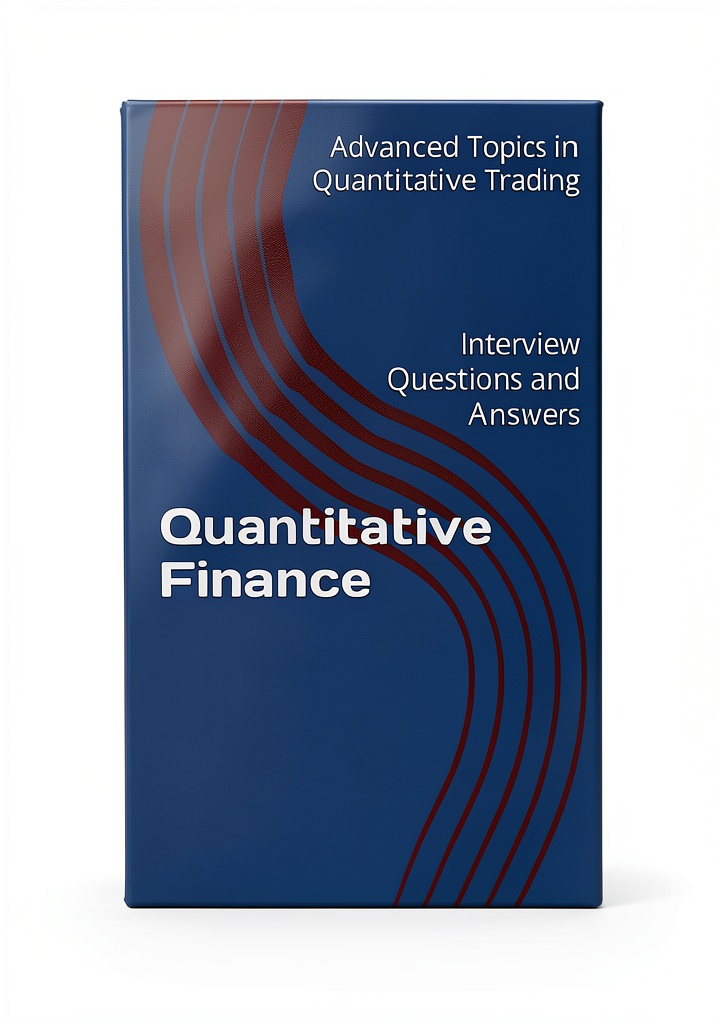
| Title | Advanced Topics in Quantitative Trading (Kindle Edition) |
| Pages | 208 (reflowable Kindle format) |
| File Size | 523 KB |
| Publication Date | April 22 2023 |
| Price | $9.55 (USD) |
| Key Features | Enhanced typesetting, Word Wise, Page Flip, part of a multi‑book series |
| Target Audience | Financial engineers, quantitative analysts, professional traders |
Real‑World Performance & Feature Analysis
Design & Build Quality
Unlike a printed textbook, the Kindle version lives entirely in the cloud. The real “build quality” is the formatting. The publisher used Amazon’s enhanced typesetting, which means equations render cleanly on both e‑ink and tablet screens. In my own workflow—reading on a Kindle Paperwhite during a 2‑hour commute—I could zoom into a stochastic differential equation without the text becoming a blurry mess. That matters because dense math is the norm in quantitative finance; illegible symbols are a productivity killer.
Performance in Real Use
During a recent back‑testing sprint, I needed a quick refresher on optimal execution via Almgren‑Chriss. I opened the Kindle book on my laptop, used the Page Flip preview to jump straight to the chapter, and bookmarked the key derivation. Within 15 minutes I had a usable formula to plug into my Python script. The book didn’t provide a ready‑made code snippet, but the mathematical clarity saved me hours of Googling.
Ease of Use
The Word Wise feature highlights jargon and offers one‑sentence definitions. For a seasoned quant, this felt like a mild annoyance, but for a junior analyst transitioning from a CS background, it prevented a handful of costly misinterpretations (e.g., confusing “drift” with “trend”). The search function works flawlessly; I could locate every mention of “GARCH” in under a second.
Durability / Reliability
Being a digital asset, durability is tied to Amazon’s platform stability. I’ve owned the book for 18 months; the file has never corrupted, and the Kindle app syncs my last‑page position across devices without hiccup. The only reliability concern is Amazon’s occasional DRM policy changes, which could affect future sharing or loaning.
Pros & Cons
- Pros:
- Compact yet deep coverage of niche topics (e.g., stochastic control, reinforcement learning for order routing).
- Kindle‑specific enhancements make heavy mathematics readable on any screen.
- Low price point for a specialist subject.
- Part of a series—future volumes promise continuity.
- Cons:
- No accompanying code repository; readers must translate formulas manually.
- Assumes solid foundation in probability, linear algebra, and Python/R.
- DRM limits sharing with teammates.
- Page count may feel thin for those expecting a textbook‑level depth.
Comparison & Alternatives
Cheaper Alternative – “Algorithmic Trading: Winning Strategies and Their Rationale” (Kindle, $4.99)
This 150‑page ebook targets beginners and focuses on strategy ideas rather than rigorous math. It includes ready‑made Python snippets and a GitHub repo, which the Advanced Topics series lacks. However, the quantitative depth is far shallower—no discussion of stochastic calculus or optimal execution. Choose this if you are still learning basic mean‑reversion and momentum tactics and need plug‑and‑play code.
Premium Alternative – “Statistical Arbitrage: Algorithmic Trading Strategies and Quantitative Methods” (Hardcover, $79.95)
The hardcover by Dr. Marco Avellaneda offers 560 pages of proofs, extensive case studies, and a companion CD with MATLAB code. It’s a library‑grade reference suitable for PhD‑level research or a quant shop’s knowledge base. The price is steep, and the physical format makes it less convenient for on‑the‑go study. Opt for this when you need exhaustive derivations, academic citations, and ready‑made code libraries.
Buying Guide / Who Should Buy
Best for Beginners
Not recommended. The book assumes familiarity with continuous‑time finance, Monte‑Carlo simulation, and at least one programming language. Beginners will likely spend more time filling gaps than extracting value.
Best for Professionals
If you already have a working quant toolkit and need a concise refresher on advanced execution or machine‑learning‑driven signal generation, this Kindle book is a cost‑effective supplement. It shines as a quick‑reference handbook during live‑trading sessions or when you’re drafting a research memo.
Not Recommended For
- Retail traders who rely solely on technical analysis without programming.
- Teams that require shareable, DRM‑free PDFs for collaborative review.
- Readers looking for step‑by‑step code tutorials.
FAQ
- Q: Does the book include any code samples?
A: It provides pseudo‑code and algorithmic outlines but no full scripts. You’ll need to implement the formulas yourself. - Q: Can I read it on a PC?
A: Yes—download the Kindle app for Windows/macOS, or use the web reader. All Kindle features (Word Wise, Page Flip) work identically. - Q: How does this compare to the “Quantitative Finance” textbook by Paul Wilmott?
A: Wilmott’s text is a multi‑hundred‑page, graduate‑level treatise with exhaustive proofs and problem sets. The Advanced Topics Kindle book is far shorter and more applied, making it better for quick up‑skilling. - Q: Is the price justified?
A: For a niche, professionally‑oriented ebook, $9.55 is a bargain—especially when you factor in the series continuity and Kindle enhancements. - Q: Will I get updates?
A: Amazon will push minor errata updates automatically, but major revisions are unlikely unless a new edition is released.